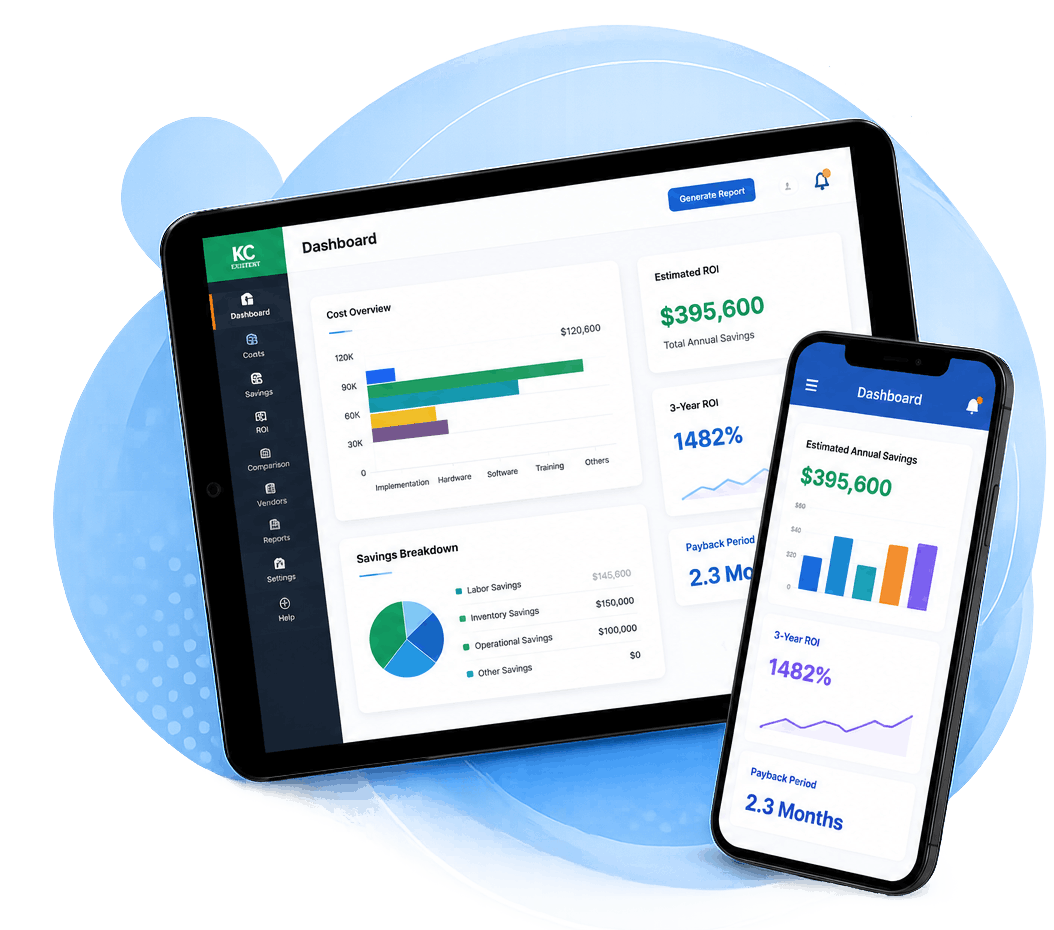
Your estimate updates instantly after calculation.
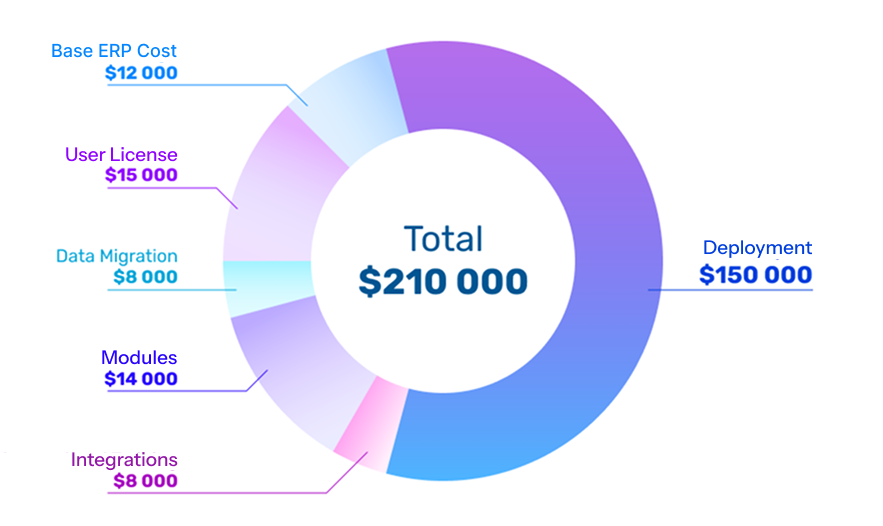
The engine relies on eight components used by ERP vendors and partners worldwide to plan and price their projects.
License for named user vs. license for concurrent users. Each new user means additional license and support costs.
Every functional area (finance, manufacturing, WMS) means implementing new time and new license tiers.
Third-party connectors (EDI) require development and maintenance costs
Pharmaceutical, manufacturing, and healthcare industries are harder to configure.
Ballpark figures based on Cinntra's implementation portfolio (2022–2026, USA market)
Different industries have different compliance rules and requirements for standardized modules.
Implementing ERP systems in the manufacturing industry is complicated and costly due to the various systems used for MRP, BOM, shop floor control, quality control, and production planning.
Business costs in the distribution industry depend on the features of the system, including a multi-warehouse system, lot tracking, EDI, and carrier integration.
Factors affecting ERP costs in the automotive industry include IATF requirements, BOM complexity, use of aftermarket parts in the business, and supply chain tracking.
ERP costs in the pharmaceutical/life science industry are affected by GxP compliance, batch tracking, 21 CFR Part 11 requirements, and validation documentation.
Retail ERP systems need integration with POS and other systems like Shopify, which are used for e-commerce synchronization and inventory control.
Healthcare ERP costs depend on compliance with HIPAA regulations, EMR integration, patient billing, and the audit trail features.
ERP features required for the food and beverage industry include lot tracking and recipe management.
Most ERP providers charge only for the software license, leaving customers to deal with hidden implementation prices, which can be significant for businesses. This is not the case with Cinntra’s itemized breakdown of all offerings before signing the contract.
Cinntra provides clients with an accurate Statement of Work containing all costs affecting the project before its start – including costs of software purchase, implementation, training, data migration, and other areas.
Estimate your annual savings, payback period and 3-Year ROI within seconds.
Annual labor savings (40% efficiency gain)
Inventory reduction savings (15%)
Revenue growth (2% better visibility)
Total annual savings
Payback period
3-Year ROI

Leading Filipino & Asian food manufacturer, wholesaler and importer operating across Los Angeles and Montebello, California.
AI Foods Corp operates USDA-certified processing facilities and manages well-known brands including Gold Medal, Lasa Kitchen, and Orient Gourmet. The company maintains strict compliance with GFSI, USDA, FDA and FSMA standards while serving the growing Asian food market in the United States.
End-to-end lot tracking implemented for raw materials and finished goods across all brands while meeting GFSI and FSMA requirements.
Live inventory visibility eliminated manual stock reconciliation and improved inventory accuracy.
Consolidated financial reports enabled faster month-end closing with automated reporting.
Improved co-packing costing and SKU-wise profitability analysis for Gold Medal, Lasa Kitchen and Orient Gourmet.
Our consultants have scoped and delivered 150+ ERP projects across manufacturing, distribution, pharma, and retail. We'll give you a real number, not a range.